

Building 4.0: Communications Infrastructure as the Digital Pillar
How high-density cabling and sensor integration transform buildings from passive structures into active, data-driven enablers of the energy transition.
The Building 4.0 era has effectively merged the IT and Energy sectors. This convergence requires a resilient, high-density optical backbone to act as the primary ’nervous system.’ By deploying ScaleFibre’s unified digital pillar, operators can finally bridge the gap between legacy infrastructure and the 2030 sustainable scenarios.
The Data-Energy Nexus
The transition to Building 4.0 is a communications challenge. Managing 40% of energy consumption requires a massive increase in data density.
483M
Connected Building Devices by 2022100%
Fiber-to-the-Sensor Reliability50+ Yrs
Life Expectancy of Premium Cabling3.0%
Required Annual Efficiency GainBuilding the High-Performance Nervous System
BIM 5D Integration
Mapping the building’s digital twin with embedded fiber optic data to manage the lifecycle of the fabric.
The Optical Backbone
Deploying High-Density Indoor Cables to unify IT, security, and HVAC into one cohesive nervous system.
Bidirectional Data Links
Utilizing Single-Mode Fiber to coordinate energy transactions between prosumers and the grid.
City-Scale Connectivity
Linking buildings to the Smart City via Outdoor Aerial Infrastructure to form Virtual Power Plants.
Legacy Siloed Infrastructure
- ✕Protocol Fragmentation: HVAC, Lighting, and IT use incompatible wiring.
- ✕Limited Bandwidth: Copper-heavy links struggle with high IoT sensor density.
- ✕Degenerative Lifecycle: Cables with short lifespans and toxic halogen jackets.
- ✕Blind Operation: Zero visibility into real-time energy flow or device health.
ScaleFibre Unified Digital Pillar
- ✓Converged Network: A single Optical Backbone for all building protocols.
- ✓Ultra-High Density: SmartRibbon Technology enables massive sensor throughput.
- ✓Sustainability First: LSZH, fire-rated materials supporting the Circular Economy.
- ✓Predictive Management: Real-time Big Data used to automate Net-Zero targets.
Communication Density vs. Energy Efficiency
Sustainability ForecastThe Smart Building Traffic Mix
Managing diverse data streams over a shared optical infrastructure.
Cabling Infrastructure Scenarios
Aligning physical layer choices with the Roadmap to 2030.
Standard Commercial
Legacy LevelStandard copper and OM3/OM4 fiber links suitable for basic office connectivity only.
- Limited to 10G/40G backbones
- High space consumption
- Non-converged silos
Compliance Level
IntermediateUpgraded cabling that meets basic fire codes but lacks high-density ribbon capacity.
- Partial IoT integration
- 100G backbone limits
- Basic connectivity
Digital Pillar Ready
Sustainable ScenarioScaleFibre Single-Mode backbones with LSZH, CPR, OFNR or OFNP rating.
- 400G/800G scalability
- Nearly Zero Energy (nZEB) support
- Circular Economy ready
Connectivity in the Field
Where high-performance communications drive the 3D challenge.

nZEB Data Integration
Using SlimCore Indoor Fiber to connect thousands of nodes for real-time energy balancing.

Virtual Power Plant Links
Providing the ultra-low latency links required to aggregate decentralized energy assets into a single grid entity.
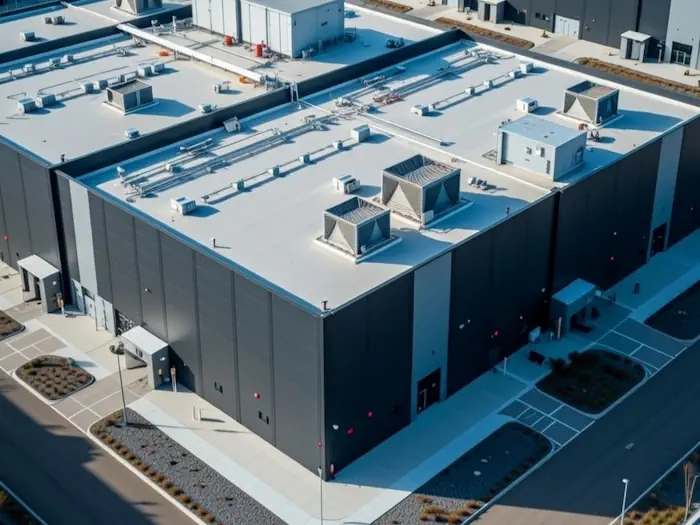
Health-Centric Intelligence
Implementing the ’nervous system’ that monitors air quality and wellness via converged fiber-to-the-room architectures.
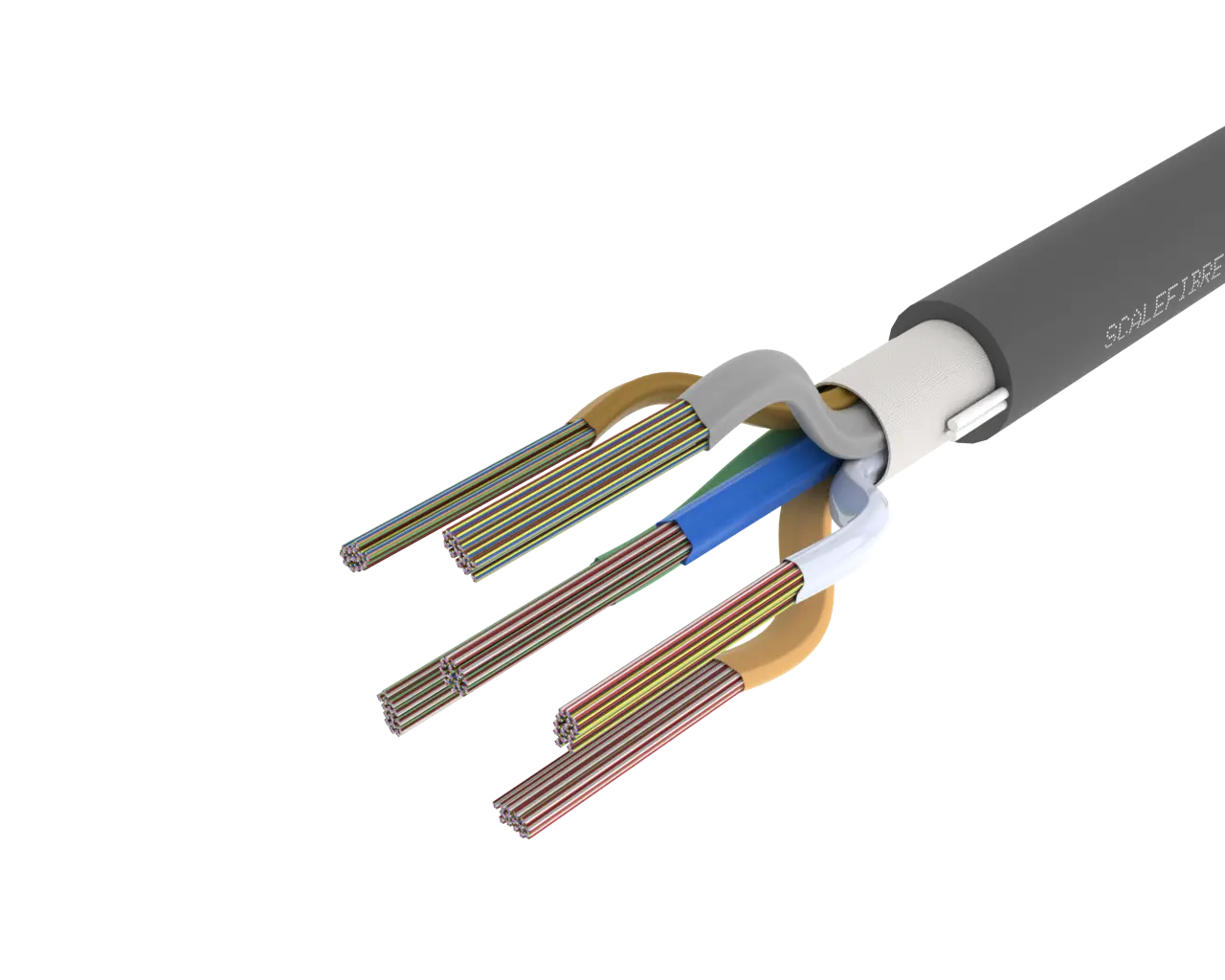
Câble à fibres optiques ignifuge SmartRIBBON™
Câble ruban ignifuge haute capacité, doté de fibres liées par intermittence et d'une gaine LSZH. Conçu pour les dénombrements de fibres denses dans les centres de données et les réseaux centraux.
Explore SmartRIBBON SolutionsThe building of 2030 provides an opportunity to become more sustainable, more forward thinking and more resilient, and optical fibre cabling provides the underlying support for that.
Technical FAQ
Deploy Your Digital Nervous System
ScaleFibre helps you design the communications pillar required for the Sustainable Scenario of 2030.
Get in TouchStandardizing Building 4.0 with high-density optical solutions.